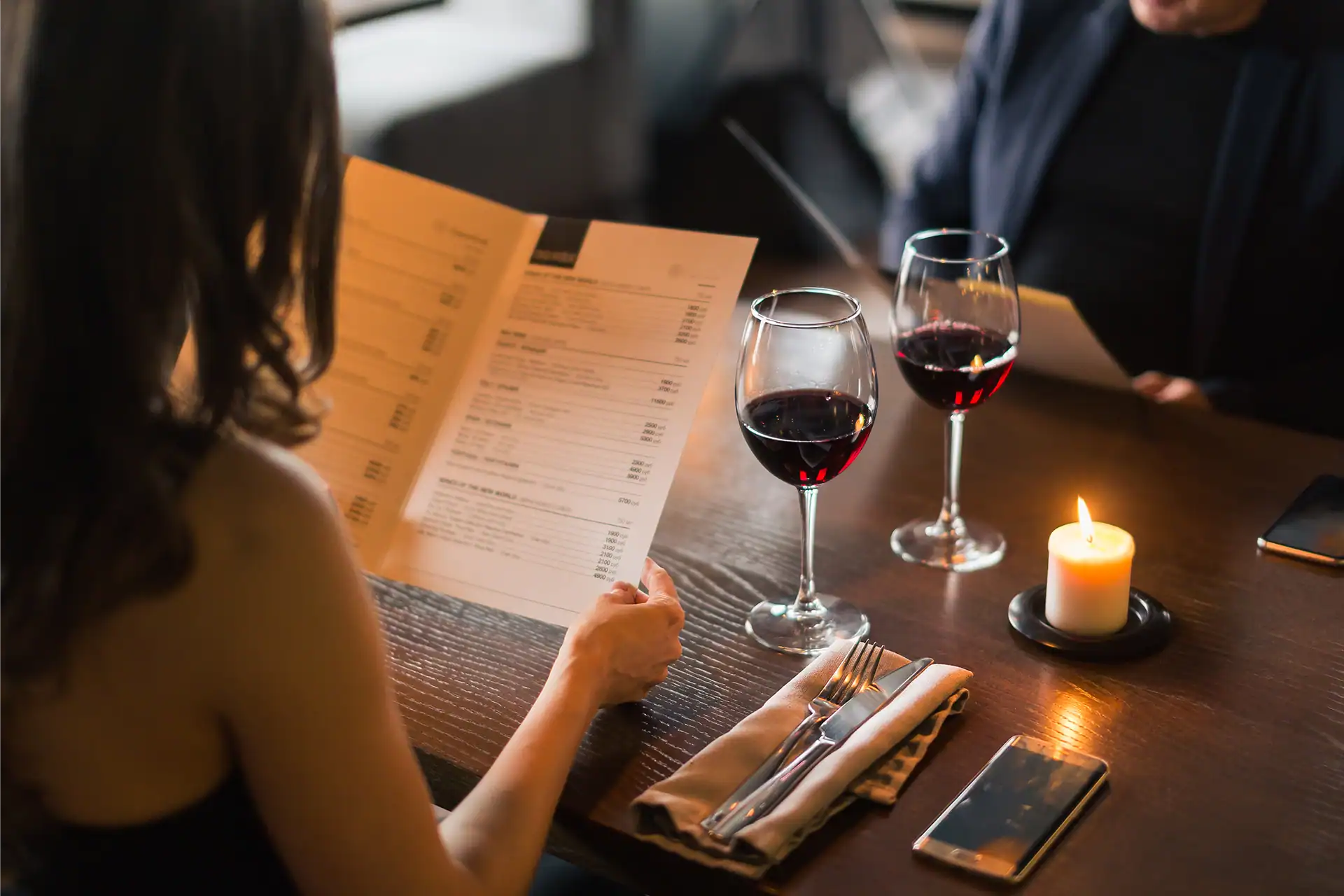
A great restaurant menu doesn’t just list items, it guides decisions. In a matter of seconds, guests scan, evaluate and choose. That’s where visual hierarchy and strategic menu design come in. The way items are organized, highlighted and emphasized can directly influence ordering behavior, check averages and overall guest experience.
Smart menu layout is part psychology, part design and all strategy.
WHY VISUAL HIERARCHY MATTERS IN MENU DESIGN
Visual hierarchy refers to how information is arranged to signal importance. On a restaurant menu, this means guiding the guest’s eye to high-margin items, signature dishes or profitable add-ons.
Studies show that guests don’t read menus top to bottom. They scan. That makes layout, typography and placement critical. Strategic menu engineering ensures the most profitable items aren’t buried in text-heavy sections.
From font size and bold headlines to spacing and alignment, small design choices can drive measurable results. Restaurant menu design isn’t decoration, it’s revenue strategy.
USING ICONS AND SYMBOLS TO DRIVE DECISIONS
Icons are powerful menu callouts when used intentionally. A small chef’s hat for “signature,” a chili pepper for “spicy” or a leaf for “vegetarian” helps guests process information quickly. These visual cues reduce friction and support faster ordering decisions.
The key is restraint. Too many icons clutter the page and dilute impact. When used sparingly, they create visual anchors that elevate specific dishes and reinforce brand personality.
BOXES, SHADING AND CALLOUTS THAT SELL
One of the most effective restaurant menu layout tricks is the use of boxes or shaded sections. Research consistently shows that boxed items attract attention first. Highlighting limited-time offers, best sellers or premium upgrades in a callout box can increase attachment rates and upsells.
Strategic white space also plays a role. Crowded menus overwhelm guests. Clean spacing improves readability and enhances perceived quality which can support higher price tolerance.
LAYOUT STRATEGY DRIVES PROFITABILITY
High-performing menus use layout psychology to steer guests toward high-margin items without feeling manipulative. Placing profitable items at natural eye-flow points, using compelling menu descriptions and limiting overly long item lists all contribute to better results.
Menu engineering and visual hierarchy work together to influence guest choices subtly but effectively. It’s about guiding, not pushing.
VIGOR’S VIEW
Restaurant menus are one of your most powerful sales tools. Thoughtful visual hierarchy, strategic menu callouts and smart layout design can increase profitability without changing a single recipe. Audit your menu with intention. Highlight what matters, simplify what doesn’t and design for decision-making.